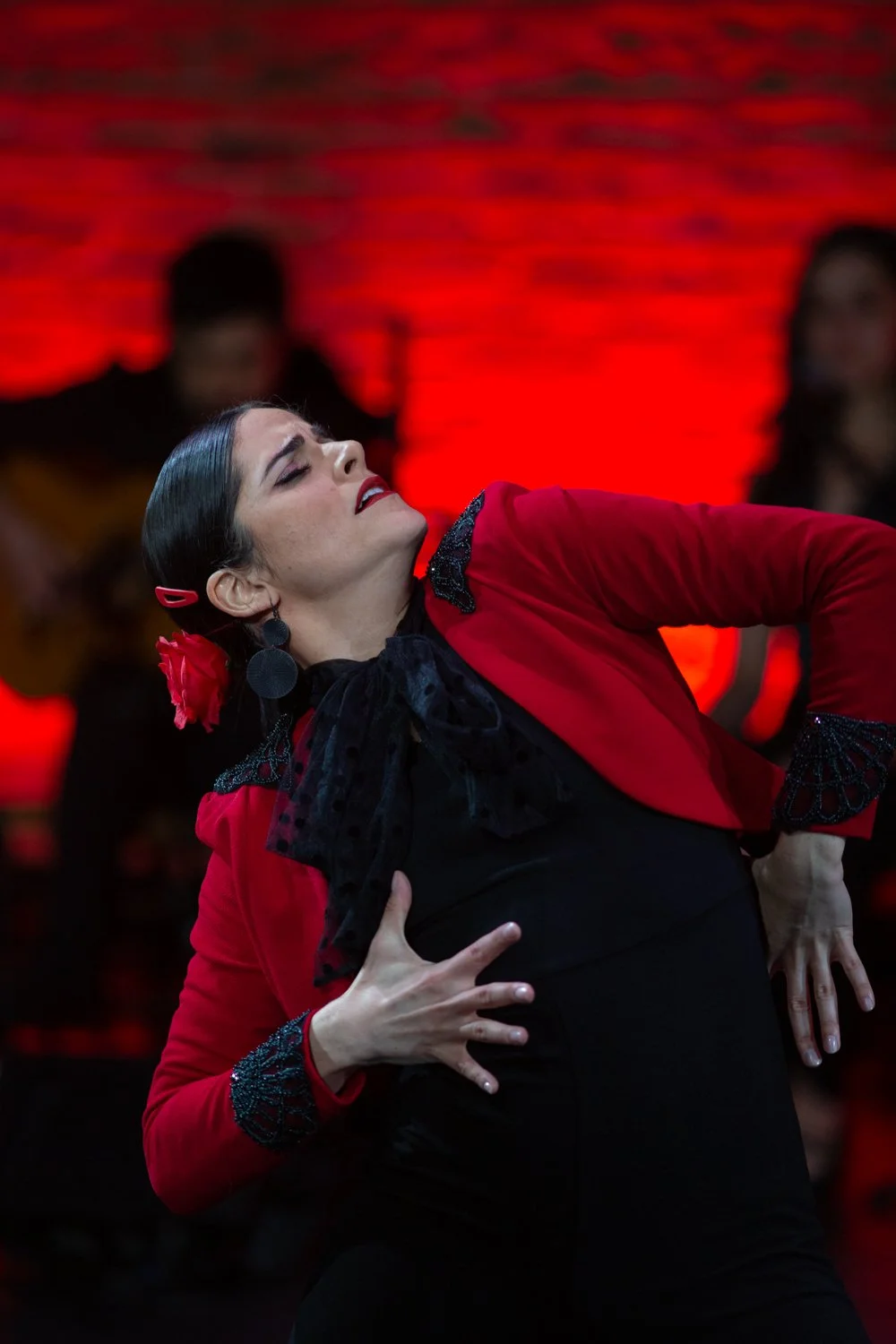
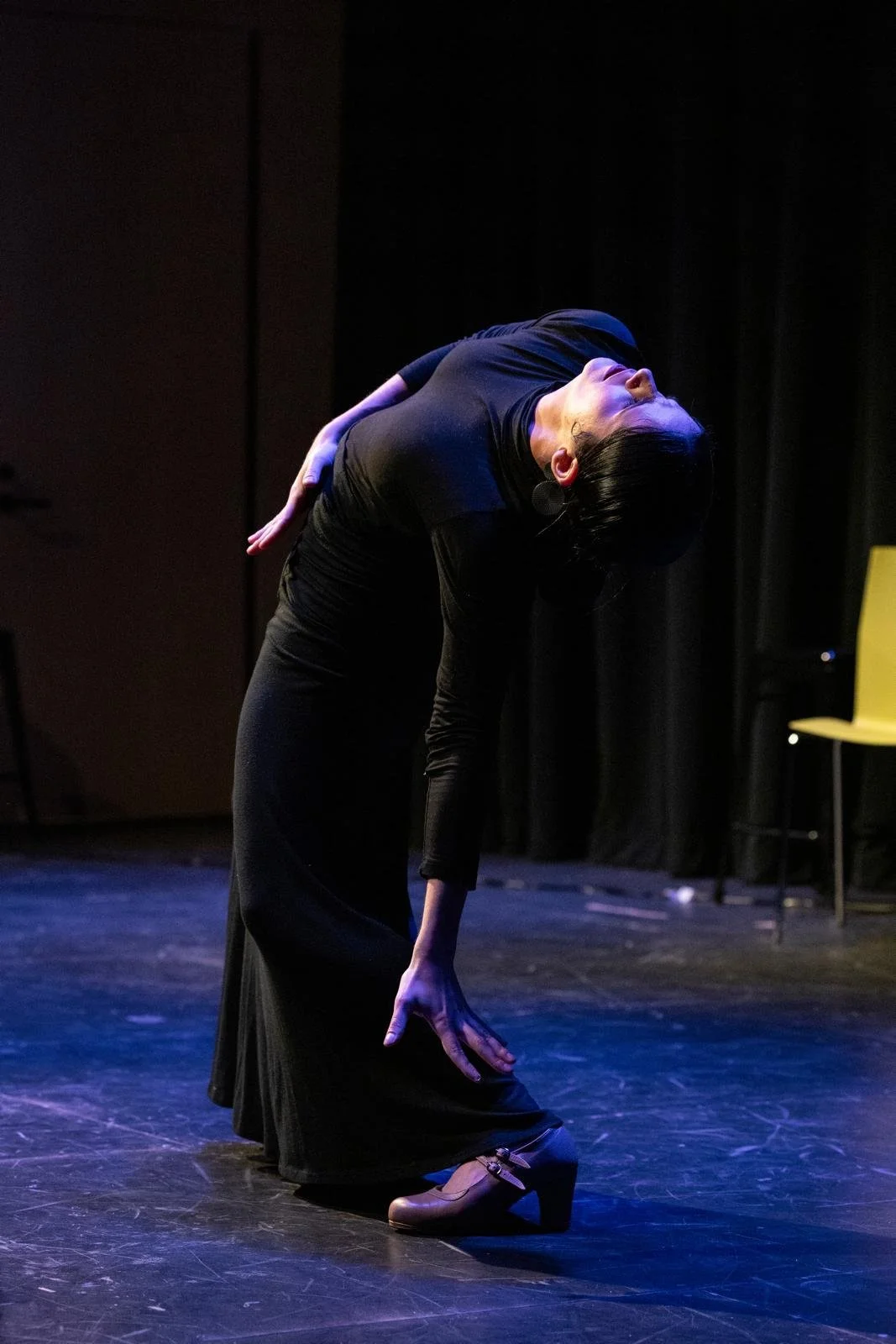
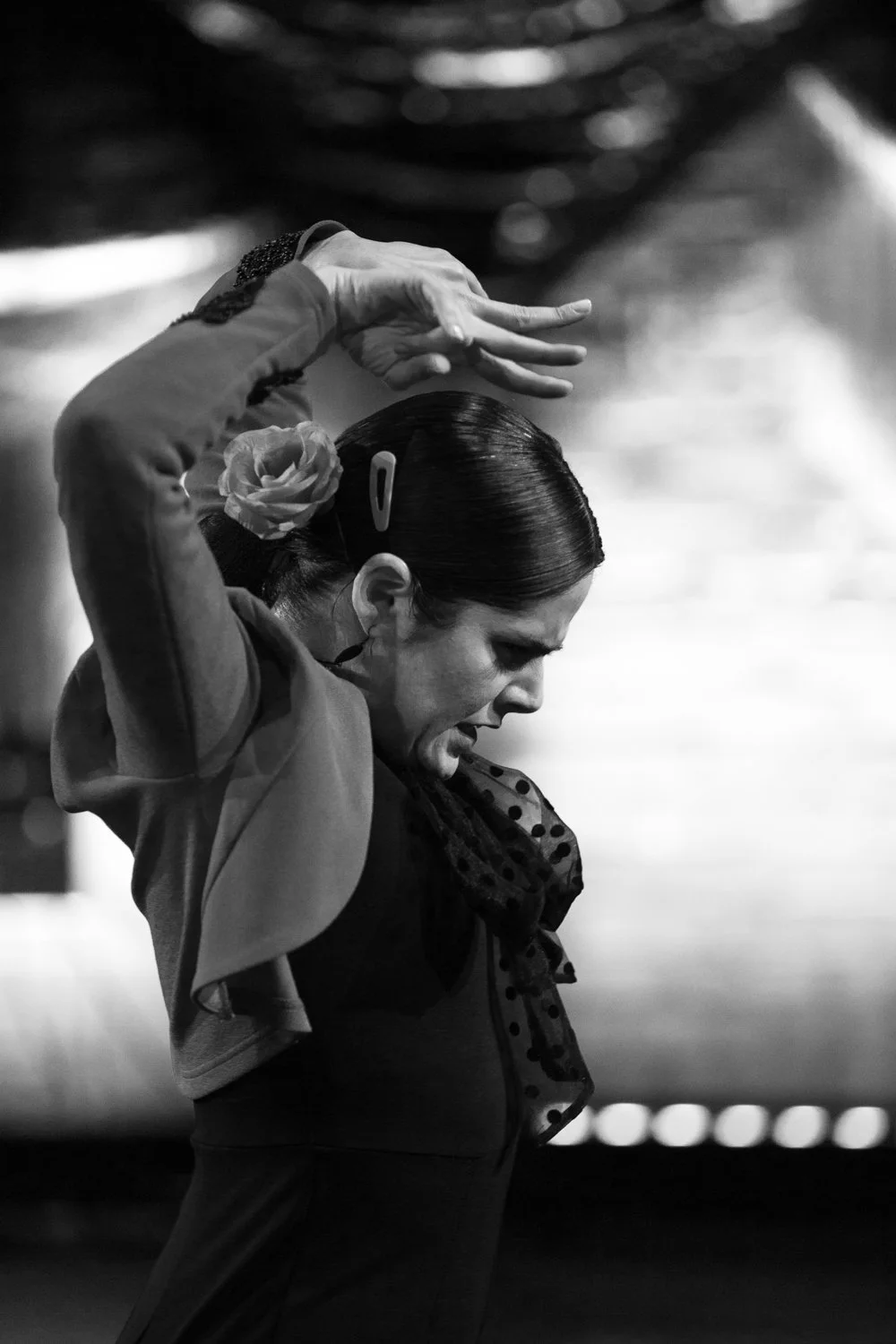
is a Cuban-born flamenco dancer, choreographer, and psychotherapist. She immigrated to the U.S. at the age of nine, and diversified her training to ballet and contemporary dance. She holds a BA in Dance and Psychology and a graduate degree in clinical social work from Smith College. Susana has studied with renowned artists in the United States and in Spain. She is featured as an emerging artist with United Flamenco Arts Society and actively teaches and performs throughout New England.
SUSANA RODRIGUEZ
My Mission…
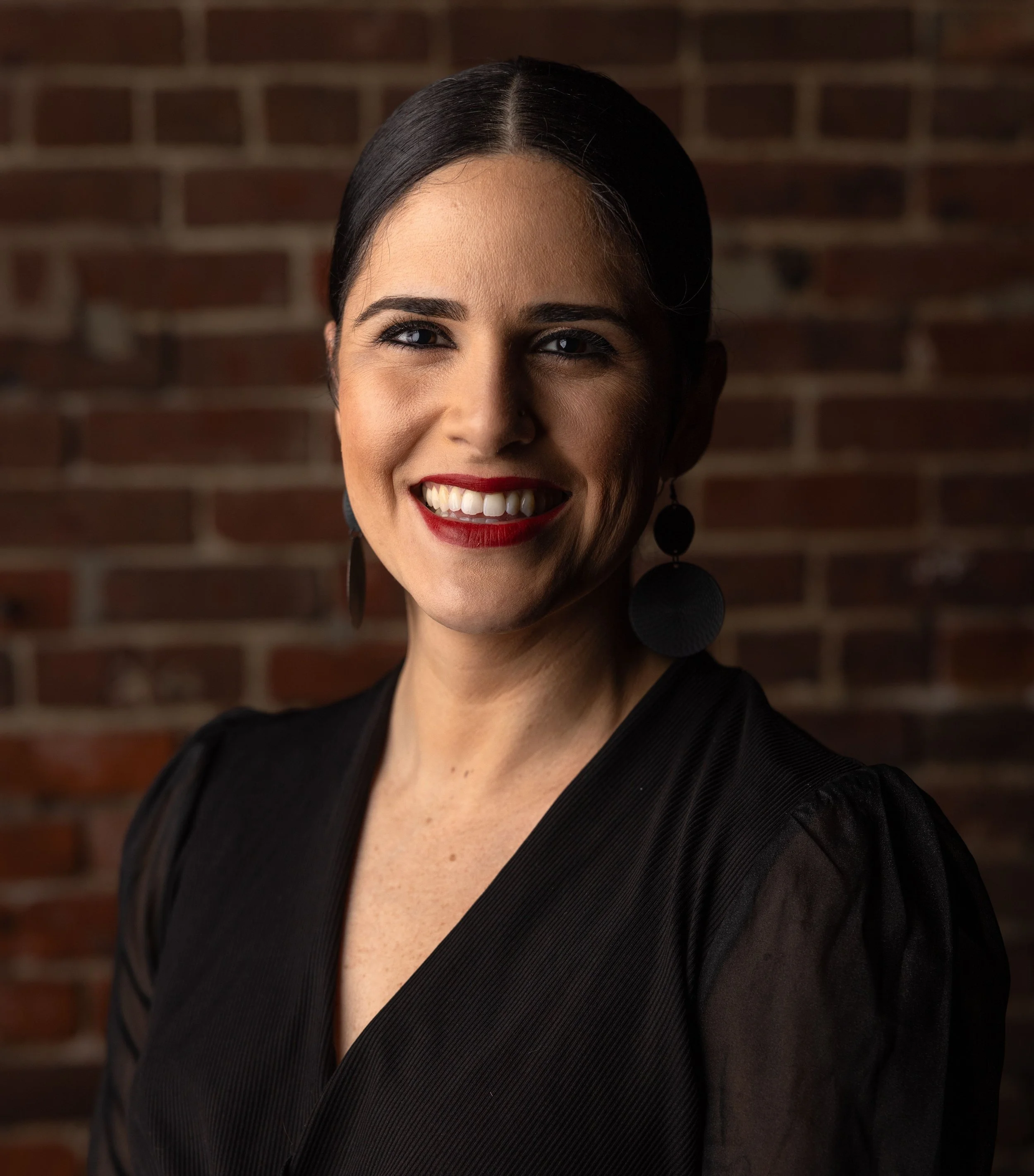
I am an embodied storyteller. As a flamenco artist and psychotherapist, I am interested in the stories that live in the body—the experiences, emotions, and questions that exist beyond language.
I use flamenco as a vessel for investigating the full range of human experience, particularly the places where emotion becomes difficult to contain or articulate. My work explores grief, longing, desire, vulnerability, survival, joy, and the uncertainty of being human. I am less interested in representing an emotion than in inhabiting it. What does grief actually do to the body? Does it make us collapse, erupt, tremble, rage, or dissociate? What happens when we are witnessed in uncomfortable states of self? Do we hide, perform, resist, or allow ourselves to be held in what we feel? I explore these questions through movement rather than trying to resolve them.
My practice is responsive and relational. Music, the people I am in dialogue with, my own internal experience, and the moment itself shape what emerges. At its most powerful, performance becomes a state of surrender in which I feel less like I am performing a predetermined story than becoming a vehicle through which one can emerge.
Flamenco's history and collective nature are central to my work. I am drawn to an art form bought to life by communities who endured marginalization, displacement, poverty, and persecution, and who transformed lived experience into shared expression. I understand resilience not as suppressing pain or simply enduring it, but as acknowledging, inhabiting, expressing, and sharing what has been lived. There is no “I” without “we.”
My work as a psychotherapist has deepened my understanding of the stories people carry and the ways our experiences connect us. Across performance, somatic workshops, teaching and coaching, I create conditions for people to encounter what their bodies already know—to access stories, emotions, and possibilities that may be difficult to reach through conscious thought alone.
Ultimately, I do not dance simply to tell an audience my story. I want to create the conditions for them to encounter something of their own. I want to go deeply enough into an experience that it becomes recognizable beyond my individual life. I want the audience to feel themselves in the work—to encounter parts of themselves that may be difficult to reach consciously, but become accessible through witnessing another person inhabit them fully.